


Dr. Dabber Switch 2 Review (2026): Next-Gen Induction Heating – Is It Worth $419.95?

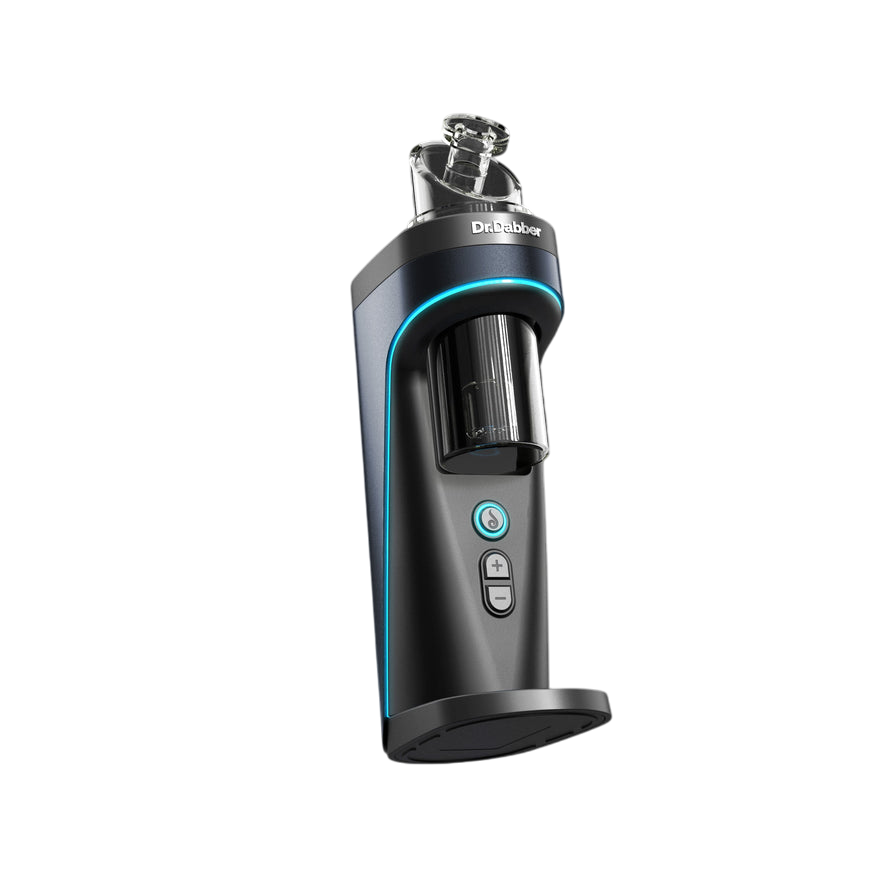
The Dr. Dabber Switch 2 takes a fundamentally different approach to heating concentrates than anything else in the e-rig category. While every other premium device uses some form of coil or contact-based heating, the Switch 2 uses induction heating with an infrared temperature sensor — a combination that delivers session consistency and temperature precision that coil-based devices cannot match.
At $419.95, it is in the same price tier as the Puffco Peak Pro 3DXL. The question is not whether one is better in an absolute sense — they take genuinely different approaches and serve different priorities. This review covers what buyers actually need to know: how the induction system works and why it matters, which heating mode to use when, whether the sapphire insert upgrade is worth it, and who the Switch 2 is and is not right for.
For the full Dr. Dabber device lineup, see the Dr. Dabber brand page and the full Dr. Dabber collection. Our Best Electric Dab Rigs & E-Rigs guide covers the full market.
The Dr. Dabber Switch 2 is the most technically advanced portable e-rig available in 2026. Induction heating with an infrared temperature sensor delivers a level of session consistency and temperature precision that coil-based devices cannot match. At $419.95, it is a premium investment that rewards experienced concentrate users with elite performance. It is not the right starting point for beginners — but for serious daily users who want the closest thing to a traditional torch setup in electronic form, it stands above everything else in the category.
Table of Contents
- 1 What Is the Dr. Dabber Switch 2?
- 2 Full Specifications
- 3 What’s in the Box
- 4 How Induction Heating Works — And Why It Matters
- 5 Descent, Ascent, and Steady — Which Mode to Use
- 6 Temperature Settings & LabLink App
- 7 Quartz vs Sapphire Insert — Is the Upgrade Worth It?
- 8 The Dr. Dabber DROP — Why It’s in the Box
- 9 Vapor Quality
- 10 Battery Life
- 11 Portability
- 12 Cleaning & Maintenance
- 13 How to Use the Dr. Dabber Switch 2
- 14 Dr. Dabber Switch 2 vs. The Competition
- 15 Pros & Cons
- 16 Full Performance Rating
- 17 Who Should Buy the Dr. Dabber Switch 2?
-
18 Frequently Asked Questions
- 18.1 Is the Dr. Dabber Switch 2 worth it in 2026?
- 18.2 How is induction heating different from regular e-rig heating?
- 18.3 Which heating mode should I use on the Switch 2?
- 18.4 Is the sapphire insert worth buying?
- 18.5 How long does the Switch 2 battery last?
- 18.6 How do you clean the Dr. Dabber Switch 2?
- 18.7 Switch 2 vs Puffco Peak Pro — which is better?
- 18.8 Is it worth upgrading from the original Dr. Dabber Switch?
- 18.9 Is the Dr. Dabber Switch 2 beginner-friendly?
What Is the Dr. Dabber Switch 2?
The Dr. Dabber Switch 2 is an induction-heated concentrate e-rig designed for experienced users who want the most precise temperature control available in a portable device. It builds on the original Dr. Dabber Switch’s induction concept with a significantly smaller form factor, an infrared temperature sensor, app-based customization via LabLink, three dynamic heating modes, and a 20mm quartz bucket insert that behaves like a real banger.
Within the Dr. Dabber lineup, it sits at the top — above the Boost EVO and the XS Nano. Replacement parts are available through our Dr. Dabber Switch 2 replacement parts section.
Full Specifications
| Specification | Detail |
| Heating System | Omnidirectional Induction Heating (no coil, no direct contact) |
| Temperature Sensor | Infrared (IR) — real-time, non-contact temperature reading |
| Heating Chamber | Grade 2 Titanium with 20mm Quartz Insert (standard) |
| Optional Insert | Sapphire Insert (~$80 extra) / Titanium Insert (~$24) |
| Vapor Path | Zirconia Ceramic — non-porous, easy to clean |
| Temperature Range | 250°F – 650°F (app) / 5 LED presets |
| Heating Modes | Descent, Ascent, Steady (app-selectable) |
| Heat-Up Time | ~15–25 seconds (mode and temp dependent) |
| Session Duration | Default 30 seconds; adjustable 10–90 sec via app |
| App | LabLink (iOS via browser) / Dr. Dabber Sync (Android) |
| App Features | Custom temp, heating profiles, session length, LED, session tracking, profile sharing |
| Battery | Internal (large capacity, undisclosed mAh) |
| Sessions Per Charge | 12–25 sessions depending on mode and session length |
| Charging | USB-C with pass-through; 36W fast charger included |
| Included | Switch 2, glass bubbler, quartz insert, carb cap, Dr. Dabber DROP hot knife, USB-C cable + 36W charger |
| Warranty | 2 Years (longer than Peak Pro’s 1 year) |
| Price | $419.95 |
What’s in the Box
- Switch 2 Base Unit (with glass bubbler and carb cap pre-installed)
- 20mm Quartz Insert
- Joystick-Style Carb Cap (magnetic)
- Dr. Dabber DROP Hot Knife (heated loading tool)
- USB-C Charging Cable
- 36W Fast Charger (wall adapter included — rare in this category)
- Small Tweezers
How Induction Heating Works — And Why It Matters
Most e-rigs use resistive heating: a coil element heats up, that heat transfers to the chamber, and the chamber heats your concentrate. The temperature can spike, drop unevenly, or drift throughout the session because the coil receives a steady power supply rather than adjusting to actual chamber conditions.
The Switch 2 works differently. An induction coil surrounds the Grade 2 Titanium chamber and creates a high-frequency alternating magnetic field. This field induces eddy currents inside the titanium, which generates heat from within the chamber itself — evenly, from all directions simultaneously. Nothing is in direct contact with the concentrate except the quartz insert.
The critical addition is the infrared temperature sensor. Rather than estimating temperature based on power output (how most devices work), the IR sensor reads the actual temperature of the insert in real time without physical contact. This data goes to a microprocessor that makes real-time adjustments many times per second — correcting for airflow from inhaling, ambient temperature, load size, and session duration.
Why IR Sensor vs Contact-Based Sensor Matters
| Factor | Infrared Sensor (Switch 2) | Contact-Based Sensor (standard e-rigs) |
| Response Speed | Fastest available — reads temperature instantly | Slower — must conduct heat through contact point |
| Accuracy | Direct reading of insert surface temperature | Estimates based on element temperature, not bowl |
| Interference | Non-contact — does not affect heating | Physical contact can affect heat distribution |
| Stability During Draw | Compensates immediately for airflow cooling | Temperature can drop measurably when inhaling hard |
| Real-World Result | Bowl temp holds precisely regardless of draw speed | Temperature varies with usage pattern |
The practical result: the Switch 2’s bowl temperature does not move during the session, regardless of how hard or soft you inhale. Other devices cannot make that claim. For flavor-focused users who run low-temp sessions where temperature precision is everything, this is not a minor difference.
Descent, Ascent, and Steady — Which Mode to Use
This is where most Switch 2 reviews leave buyers without enough guidance. The three heating modes are not just a novelty feature — they are a meaningful tool that changes how your session feels, and the right choice depends on your material and personal preference.
| Mode | How It Works | What It Feels Like | Best For |
| Descent (Default) | Temperature starts at your set point and gradually decreases throughout the session | Mimics the natural cooling of a traditional quartz nail — starts strong, becomes increasingly flavorful | Live rosin, live resin, premium concentrates — the default for a reason |
| Ascent | Temperature starts lower and gradually increases during the session | Mimics torching a nail while inhaling — starts flavorful, builds to clouds | Cold-start style sessions; flavor chasers who want terpenes first, then vapor density |
| Steady | Temperature stays precisely constant throughout the full session | Predictable and repeatable — same result every time | App monitoring, precision testing, users who want consistency over dynamism |
Temperature Settings & LabLink App
Out of the box, the Switch 2 has five LED preset temperatures from 400°F to 540°F. Each preset is indicated by a color:
| Color | Temp (Default) | Best Use |
| Purple | 400°F / 204°C | Ultra low-temp — maximum terpene expression, very light vapor |
| Blue | 440°F / 227°C | Low-temp flavor focus — live resin, live rosin |
| Cyan | 480°F / 249°C | Balanced — flavor and vapor production |
| Orange | 500°F / 260°C | Daily driver for most users, strong vapor with good flavor |
| White | 540°F / 282°C | Maximum default output, heavy vapor |
Via the LabLink app, these presets can be customized to any temperature between 250°F and 650°F in 1-degree increments. Saved presets are stored on the device, not in the app, so your custom settings work anywhere without opening the app.
LabLink App Key Features
- Precise temperature control — any degree between 250°F and 650°F
- Session duration control — adjustable 10–90 seconds per preset
- Real-time temperature display — watch the bowl temperature live during your session
- Heating profile selection — Descent, Ascent, or Steady per preset
- Profile sharing — share your dialed-in settings with other Switch 2 users
- LED and haptic customization — including the ability to disable haptic feedback
- Session tracking and stats
- Firmware updates over-the-air
Quartz vs Sapphire Insert — Is the Upgrade Worth It?
The Switch 2 ships with a 20mm quartz insert. Dr. Dabber sells an optional sapphire insert for approximately $80. Every review mentions sapphire is ‘better for flavor’ without explaining the specifics.
| Factor | Quartz Insert (Stock) | Sapphire Insert (Optional) |
| Heat-Up | Fast — quartz responds quickly | Slightly slower — sapphire absorbs more heat initially |
| Flavor | Clean and neutral — good terpene expression | More refined terpene representation, especially at low temps |
| Heat Retention | Lower — temperature adjustments are more responsive | Higher — stays hotter longer, more forgiving for session pacing |
| Durability | Very durable — can be torched for deep cleaning | More fragile — avoid rapid thermal shock, gentle cleaning |
| Replacement Cost | ~$39 | ~$80 |
| Best For | Daily use, most concentrate types | Premium rosin/resin, maximum flavor refinement |
The honest assessment: the quartz insert is excellent and most users will not feel short-changed by the stock setup. The sapphire upgrade makes a real but subtle difference in terpene representation at low temperatures — most noticeable with fresh-pressed rosin or high-quality live resin. For casual concentrate users, quartz is sufficient. For flavor-obsessed daily users who run 400°F–440°F sessions, the sapphire upgrade is worth considering as a second purchase.
The Dr. Dabber DROP — Why It’s in the Box
The DROP is a temperature-controlled heated loading tool (hot knife) included with every Switch 2 kit. A comparable standalone tool runs $40–50. It has two heating modes:
- Single click — normal temperature for standard concentrates: wax, shatter, BHO
- Double click — low temperature mode for fresh-press hash rosin and sticky, viscous concentrates
The low-temperature mode is the genuinely useful addition. Fresh-press rosin is often too sticky and viscous to pick up cleanly with a standard dab tool. The DROP’s low heat gently melts the surface, allowing you to sculpt and portion a dab-sized slice without making a mess. For rosin users, this alone is a meaningful quality-of-life improvement.
The tip is ceramic and does not need replacement. It charges via USB-C and the magnetic cap secures to the back of the tool during use so it is not misplaced.
Vapor Quality
The Switch 2’s vapor quality advantage is not just about the heating system in isolation — it is about three things working together: induction heating that distributes heat evenly, the IR sensor that holds temperature precisely, and the zirconia ceramic vapor path that is non-porous and neutral in flavor.
At 400°F–480°F in Descent Mode, the terpene clarity is genuinely exceptional. Live rosin and live resin show full flavor complexity in a way that is difficult to achieve on other e-rigs. The temperature does not spike, does not drop when you inhale hard, and does not drift toward the end of the session. What you set is what you get.
At higher settings (500°F–540°F) in Steady or Descent Mode, cloud production is substantial. The 20mm quartz bowl handles serious loads without the material pooling or splattering issues common in smaller chambers.
Vapor Performance Scores
Battery Life
Sessions Per Charge by Mode (each dot = 1 session)
~17–25 sessions per charge at 30-second stock settings. Extended 90-second sessions reduce the count to ~10–12. USB-C pass-through charging removes battery constraints near a power source.
The most important battery feature is pass-through charging — the Switch 2 can be used while plugged in, which effectively eliminates battery as a limitation at home.
Dr. Dabber claims up to 50 sessions per charge — that figure applies at the lowest demand settings with short sessions. Real-world testing at stock settings with 30-second sessions delivers 17–25 sessions. Extended 90-second sessions bring the count down to 10–12. The battery is large (likely 3000–4000mAh based on performance), and it significantly outlasts smaller e-rigs like the Boost EVO or XS Nano at equivalent usage intensity.
Pass-through charging is available, and the included 36W fast charger brings the battery from empty in approximately 60–90 minutes. A helpful detail: the Switch 2 gives a warning flash on its last dab — you get one full session of notice before the battery runs out.
Portability
The Switch 2 is transportable rather than truly portable. It fits in a bag or travel case without issue, is significantly smaller than the original Dr. Dabber Switch, and the dedicated power switch on the back (vs. five-click on/off used by most e-rigs) makes it fast to turn off before packing. Dr. Dabber does not include a carry case in the box.
In practice, most Switch 2 owners use it primarily at home. Taking it to a friend’s place or on a car trip works fine. Regular commute use or outdoor carry is less practical than with the Boost EVO or XS Nano.
Cleaning & Maintenance
The Switch 2 is easier to maintain than most premium e-rigs at this price. The modular design allows full disassembly without threading, and the zirconia ceramic vapor path is accessible and easy to wipe clean.
After Every Session
- Wait 10 seconds for remaining oil to thicken and cool slightly
- Swab the warm quartz (or sapphire) insert with a dry Q-tip to remove residue
- Use an ISO Q-tip for a cleaner finish — the insert will be nearly clean
- Wipe the mouthpiece with a dry cloth or ISO wipe
Weekly Deep Clean
- Remove the glass bubbler and soak in 90%+ isopropyl alcohol for 20–30 minutes
- Pull off the top plate (magnetic, no threading) and wipe the underside with ISO
- Remove the quartz or sapphire insert and soak in ISO, or gently torch the quartz insert to burn off residue
- Clean the zirconia ceramic vapor path with an alcohol wipe — accessible at the top of the unit
- Wipe down the induction well with ISO
- Reassemble and allow to dry completely
How to Use the Dr. Dabber Switch 2
Basic Session Setup
- Push up from the base of the glass bubbler to remove it, fill to approximately one-quarter capacity with water
- Replace the glass, aligning the markings on the bubbler with those on the device
- Remove the magnetic carb cap
- Use the DROP hot knife or a dab tool to load concentrate into the quartz insert
- Replace the carb cap (it snaps magnetically)
- Slide the power switch on the back to turn on the device — it vibrates and shows battery level
- Press + or − buttons to select your temperature preset
- Press the main power button to start the heating cycle
- When the device vibrates and shows green: begin inhaling slowly
- You can lift the magnetic carb cap during the session to control airflow
- After the session, wait 10 seconds and swab the warm insert with a Q-tip
Dr. Dabber Switch 2 vs. The Competition
Switch 2 vs. Puffco Peak Pro 3DXL
| Feature | Dr. Dabber Switch 2 | Puffco Peak Pro 3DXL |
| Heating Method | Induction (no coil contact) | 3D ceramic wall coils (contact heating) |
| Temp Sensor | ✓ Infrared (IR) — real-time non-contact | Contact-based — good but slightly less responsive |
| Insert Replacement | ✓ Insert only (~$39) | Full chamber (~$100–$125) |
| Session Modes | ✓ Descent, Ascent, Steady | Standard presets + Intensity Mode |
| App | LabLink — full customization | Puffco Connect — refined, longer-established |
| Portability | Home-first, transportable | ✓ More portable, carry case included |
| Heat-Up Speed | ~15–25 seconds | – ~20 seconds |
| Warranty | ✓ 2 Years | 1 Year |
| Bowl Size | ✓ 20mm quartz (larger) | 3DXL ceramic (78% larger than std) |
| Price | $419.95 | $420 |
The
Puffco Peak Pro 3DXL is more portable, has the more polished and established app, and is easier to pick up for users coming from other e-rigs. The Switch 2 offers superior temperature precision via induction + IR, better insert replacement economics (~$39 vs ~$100–$125), three dynamic heating modes the Peak Pro cannot replicate, and a 2-year warranty. Same price. Different philosophies. Choose based on whether your priority is portability and app polish (Peak Pro) or temperature precision and session consistency (Switch 2).
Switch 2 vs. Dr. Dabber Boost EVO
| Feature | Switch 2 | Boost EVO |
| Heating | Induction (non-contact) | Quartz atomizer (contact) |
| Temp Sensor | ✓ Infrared, real-time | Contact sensor, good |
| Session Modes | ✓ Descent/Ascent/Steady | None (fixed session timer) |
| Heat-Up Speed | ~15–25 sec | ✓ ~10–15 sec (faster) |
| Portability | Home-first | ✓ More portable |
| Price | $419.95 | $279.99 |
| Best For | Home precision performance | Portable premium use |
The Dr. Dabber Boost EVO heats faster and costs $140 less. The Switch 2 has superior temperature precision, dynamic heating modes, and is the better choice for home-based daily use where consistency matters more than portability or price. If you already own a Boost EVO and are a heavy daily user, the Switch 2 is a meaningful upgrade. If you prioritize portability, keep the Boost EVO.
Switch 2 vs. Original Dr. Dabber Switch — Is It Worth Upgrading?
This is the most common question from existing Switch owners. Direct answer:
- Yes, for daily heavy users: improved form factor (significantly smaller), IR temperature sensor, three dynamic heating modes, LabLink app, 20mm quartz insert, and the DROP hot knife. These are meaningful functional improvements.
- Maybe, for moderate users: if your original Switch is working well and you are happy with the experience, the upgrade is nice but not urgent. The core induction concept is the same.
- Not necessary for occasional users: the original Switch still produces excellent vapor. Budget for concentrates instead.
Pros & Cons
- Induction heating — no coil, no contact, no burning
- Infrared temperature sensor: real-time reading, fastest response in the category
- Three dynamic heating modes: Descent, Ascent, Steady — mimics torch dab behavior
- 20mm quartz bucket — same size as a standard banger, handles serious loads
- 5 temp presets (250°F–650°F) + full app customization (1-degree precision)
- Quartz insert replaceable alone — no need to replace full chamber like Peak Pro
- Dr. Dabber DROP hot knife included — a $40–50 accessory built into the kit
- Ceramic zirconia vapor path — clean, non-porous, easy to clean
- Pass-through USB-C charging, 36W fast charger included
- Strong battery — 12–25 sessions depending on mode and session length
- 2-year warranty (longer than Peak Pro’s 1 year)
- Compatible with 20mm aftermarket bubble caps and custom glass
- Desktop-first — transportable but not pocket-portable
- Learning curve — not ideal for first-time e-rig buyers
- LabLink app setup can be frustrating on first sync
- Sapphire insert upgrade is extra cost (~$80) if you want maximum flavor
- Larger and heavier than Boost EVO or XS Nano
- Bulkier form factor than the Puffco Peak Pro
Full Performance Rating
| Category | Score | Notes |
| Vapor Quality | 9.5 / 10 | Best-in-class consistency and terpene clarity |
| Build Quality | 9.2 / 10 | Premium aluminum, titanium chamber, ceramic path |
| Temperature Control | 9.7 / 10 | IR sensor + induction — most precise in category |
| Battery Life | 9.0 / 10 | Significantly better than compact e-rigs |
| App & Customization | 9.0 / 10 | Full-featured; LabLink setup can require troubleshooting |
| Ease of Use | 8.2 / 10 | Learning curve; not beginner-first |
| Maintenance | 8.8 / 10 | Easy and accessible; vapor path fully visible |
| Portability | 7.5 / 10 | Transportable, not portable |
| Value for Price | 8.5 / 10 | Premium pricing, elite performance |
| Innovation | 9.7 / 10 | Most technically advanced e-rig in the category |
| OVERALL | 9.3 / 10 | #1 E-Rig Recommendation 2026 |
Who Should Buy the Dr. Dabber Switch 2?
Strong fit for:
- Experienced concentrate users who want the most precise temperature control available
- Flavor-obsessed buyers who run low-temperature sessions with premium live rosin or live resin
- Home-based daily users who want consistent, repeatable sessions without guesswork
- Users upgrading from a Boost EVO or similar quartz e-rig who want the next level
- Anyone who has used a traditional torch setup and wants an electronic equivalent that feels similar
Not the right fit for:
- First-time e-rig buyers — simpler devices are better starting points
- Users who want maximum portability — the XS Nano or Boost EVO are more travel-friendly
- Buyers with a limited budget — the Boost EVO at $279.99 or XS Nano at $189 are the better-value Dr. Dabber entries
- Users who primarily want app polish and a familiar e-rig workflow — the Puffco Peak Pro ecosystem is more refined
For context across the full Dr. Dabber range, see the Dr. Dabber Switch 2 category page and all Dr. Dabber devices. Our Best Electric Dab Rigs & E-Rigs guide places it in context with the full 2026 market.
Frequently Asked Questions
Is the Dr. Dabber Switch 2 worth it in 2026?
Yes — for the right user. At $419.95, it is the most technically advanced portable e-rig available. Induction heating with an infrared sensor delivers session consistency that coil-based devices cannot match. For experienced daily concentrate users who prioritize flavor precision and consistent performance, the price is justified. For beginners or occasional users, simpler and less expensive options are better starting points.
How is induction heating different from regular e-rig heating?
Standard e-rigs heat a coil that transfers heat to the chamber by contact. The Switch 2’s induction coil creates a magnetic field that heats the titanium chamber from within, with no coil touching the concentrate. Combined with the infrared temperature sensor, the bowl temperature is measured and maintained in real time, making it the most precise heating system in the category.
Which heating mode should I use on the Switch 2?
Descent Mode is the default and works best for most users with premium concentrates. The temperature starts at your set point and gradually decreases, mimicking the natural cooling of a traditional quartz nail. Ascent Mode is for cold-start style sessions where you want flavor first and clouds second. Steady Mode is best when you want identical results every session or when monitoring temperature via the app.
Is the sapphire insert worth buying?
For most users, the stock quartz insert is excellent and the upgrade is not necessary. For flavor-obsessed users who run sessions at 400°F–440°F with fresh-press rosin or high-quality live resin, the sapphire insert provides a noticeably more refined terpene representation. It is more fragile than quartz and costs ~$80. Consider it as a second purchase once you know how heavily you use the device at low temperatures.
How long does the Switch 2 battery last?
17–25 sessions at stock 30-second session settings. Extended 90-second sessions bring the count to 10–12. Dr. Dabber claims 50 sessions, which applies under lowest-demand conditions. Pass-through charging is available, and the included 36W fast charger brings the battery from empty in 60–90 minutes.
How do you clean the Dr. Dabber Switch 2?
After every session: swab the warm insert with a dry Q-tip, use an ISO Q-tip for a cleaner finish, and wipe the mouthpiece. Weekly: soak the glass in ISO, wipe the top plate underside and induction well with ISO, soak or torch-clean the quartz insert, and clean the zirconia ceramic vapor path with an alcohol wipe. The vapor path is fully visible and accessible from the top of the device.
Switch 2 vs Puffco Peak Pro — which is better?
They are different approaches at the same price. The Switch 2 wins on temperature precision (IR sensor + induction), insert replacement cost (~$39 vs ~$100–$125), dynamic heating modes, and warranty length (2 vs 1 year). The Peak Pro 3DXL wins on portability, the Puffco Connect app ecosystem, and ease of use for users familiar with the Peak platform. Choose based on whether your priority is precision (Switch 2) or portability and app polish (Peak Pro).
Is it worth upgrading from the original Dr. Dabber Switch?
For daily heavy users: yes. The Switch 2 is significantly smaller, has the infrared sensor, three dynamic heating modes, the LabLink app, and a 20mm quartz insert — meaningful functional improvements. For moderate or occasional users, the original Switch still performs well and the upgrade is not urgent.
Is the Dr. Dabber Switch 2 beginner-friendly?
Not ideal for first-time e-rig buyers. There is a learning curve with the different heating modes and LabLink app setup. Once dialed in, it becomes routine — but the Switch 2 rewards users who already understand temperature, extraction, and concentrate types. A better starting point for beginners is the Boost EVO or, for maximum simplicity, the XS Nano.
